


TNA+
Anthem Sports & Entertainment Inc.
I approached TNA+ as an entertainment app for wrestling fans who want more than a quick clip or a live television slot. After spending time with it, my main question was not whether it could provide an exciting first evening, but whether it deserved a regular place on my phone after that initial curiosity faded. The answer is fairly positive, although it depends heavily on how much wrestling you actually watch and how willing you are to manage a paid viewing habit.
The app comes from Anthem Sports & Entertainment Inc. and is free to install, with optional purchases ranging from $7.99 to $219.99 per item. That combination makes the first step easy, but it also means the real value is tied to what access you choose and how consistently you use it. I found it most appealing when I treated it as a dedicated wrestling library rather than as a general entertainment service.
From an exciting first week to a realistic long-term habit
Why the first sessions feel worthwhile
The strongest part of the experience is the immediate sense of having a focused destination for wrestling. Instead of searching through a broad video service and hoping to find relevant material, I could open the app with a clear idea of what I was there to watch. That narrow purpose is a strength: the interface and content identity feel more direct than a general streaming platform where wrestling is only one small category among many.
For a new user, the first week can be especially enjoyable because there is plenty to explore. The service is presented around instant access to thousands of hours of wrestling, so it naturally suits a discovery session: watch one match, browse around, then follow a different era, performer, or event. I liked that the app encouraged browsing without requiring me to know exactly what I wanted before opening it.
That abundance can also be slightly overwhelming. A large archive is useful only when I can narrow it down efficiently. If I opened the app without a plan, I sometimes spent more time deciding what to watch than actually watching. My practical solution was to begin with a specific goal, such as revisiting a particular event or choosing one match for a short break, rather than trying to conquer the entire catalog in one sitting.
Related News

Why WhatsApp Messenger Still Makes Everyday Communication Feel Easy

Jurassic World: The Game Is the Better Dino Tycoon for Strategic Players

Threads in Real Life: Who Should Join, Lurk, or Leave

How SHEIN Turned Shopping Into an Endless Content Feed

How to Make Fortnite Feel Smarter on Mobile

Should You Switch to Microsoft Outlook on Mobile?
The best everyday scenario
A realistic use case is a quiet evening when I have enough time for one full event, but not enough energy to browse several unrelated services. TNA+ works well in that situation because the app’s identity is unambiguous. I can settle into wrestling immediately instead of moving between recommendations designed for films, drama, news, and sports.
It also fits shorter viewing windows. If I have only a few minutes, I can use the library for a single match or a brief revisit instead of starting a long series. That flexibility matters more than it sounds. A service becomes part of a routine when it works both for a planned viewing night and for the small gaps between daily tasks.
However, I would not recommend subscribing purely because the first week feels exciting. Wrestling archives reward curiosity, but curiosity alone can disappear quickly. Before paying for a longer period, I would spend the initial access time testing whether the available material matches my personal interests. Someone who follows TNA closely will probably find that easier than someone who only watches occasional major wrestling events.
Gallery
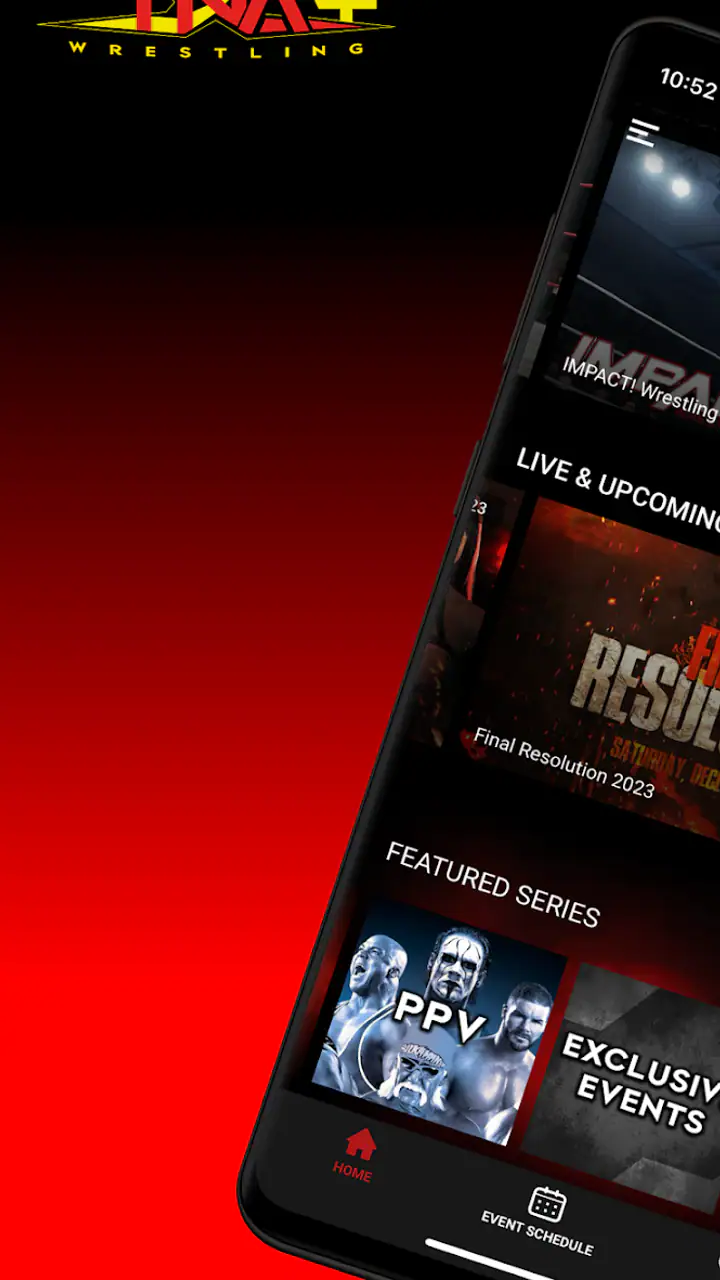
How it compares with ordinary alternatives
Compared with general streaming apps, this service wins through focus. A broad platform may offer more types of entertainment overall, but it usually makes wrestling compete with everything else in the catalog. TNA+ removes that distraction and gives fans a more specialized place to look.
Compared with free video platforms, the trade-off is different. Free services are convenient for isolated clips, commentary, and fan-uploaded discoveries, but they can be inconsistent in organization and availability. A dedicated service is more attractive when I want a sustained viewing session rather than a random collection of short videos.
Compared with following wrestling only through television or social media, the app offers a more on-demand style of use. I am not limited to whatever happens to be airing at that moment, and I do not have to rely on a short highlight to understand why a match matters. The downside is that this convenience creates another subscription decision, which is harder to justify if I already pay for several entertainment services.
What the rating suggests in practical terms
The app holds an average rating of 3.5 from around 2,000 ratings, alongside roughly 600 written reviews. I read that as a sign of a useful but not universally smooth experience. The concept is easy to understand and the audience is clear, yet a specialized streaming app has to satisfy people not only with content but also with dependable browsing, playback, account access, and ongoing value.
It has passed the threshold of more than 100,000 installs, which is enough to show that it serves a real audience rather than being an obscure experiment. Still, popularity does not automatically answer the question that matters most to an individual user: will I open it often enough to justify keeping it installed? For me, that depended less on the novelty of the archive and more on whether wrestling was already part of my weekly routine.
Finding month-to-month value
The long-term case is strongest for viewers who enjoy revisiting older material. Wrestling is unusually suitable for repeat viewing because the appeal is not limited to the result. The pacing, entrances, rivalries, crowd reactions, and context can make a familiar match feel different when watched months later. A dedicated archive benefits from that kind of repeat behavior more than a service built around one-time viewing.
I also found value in using the app as a structured alternative to constantly chasing new releases. When I had already watched the current match or event that interested me, the library gave me a reason to stay with the service. That is an important distinction: recurring value comes from having a personal viewing plan, not simply from knowing that a large catalog exists.
For a casual viewer, the calculation is less favorable. If you watch wrestling only when friends recommend something or when a major story reaches a peak, a general sports or entertainment option may be more economical. TNA+ makes more sense when its specialization saves you time and gives you enough material to return regularly.
The free price of the download lowers the barrier to trying it, but the optional purchases require attention. The listed purchase range stretches from $7.99 to $219.99 per item, so I would not make a long commitment casually. I would first decide how often I realistically expect to watch, then compare that habit with the cost of the access option I am considering. The cheapest choice is not automatically the best one if I stop using the app after a few weeks.
A practical routine that improves its value
My most useful approach was to create a simple rotation rather than opening the app aimlessly. One session could be devoted to a complete event, another to selected matches, and a third to exploring something outside my usual preferences. This prevented the catalog from feeling like an endless wall of choices and made each visit feel intentional.
I also recommend deciding in advance whether you are watching for current interest, nostalgia, or discovery. Those are different goals. Nostalgia works best when you already have a particular memory to revisit. Discovery benefits from browsing. Current interest calls for checking what is relevant now. Mixing all three without a plan can make the service feel less organized than it really is.
A second useful habit is to stop a session when your attention drops instead of treating the size of the catalog as a challenge. Thousands of hours sound impressive, but no archive creates value if it turns entertainment into homework. The aim should be a reliable source of enjoyable viewing, not an obligation to consume everything available.
The maintenance burden of keeping it useful
The app itself is not difficult to understand, but maintaining its value requires a little discipline. I had to keep track of what I wanted to watch, avoid paying for access during periods when wrestling was not part of my routine, and remember that a free installation does not mean unlimited use without a purchase decision. That is a normal burden for subscription-style entertainment, but it is still a burden.
There is also the mental maintenance of managing a large archive. A focused service can reduce search time compared with a general platform, yet an extensive wrestling library can still produce choice fatigue. I found it helpful to keep a short personal list of events or matches rather than relying on memory. That small step made returning to the app much easier.
Because the app is rated for Teen audiences, I would also consider whether it fits the viewing habits of everyone using the device. A Teen rating is not the same as a universal family recommendation. Parents should make their own judgment about whether the wrestling presentation and surrounding material suit younger viewers, especially if children might browse independently.
The minimum operating-system requirement is Android 7.0, which makes the app accessible on a broad range of Android devices. That is useful for people who do not replace their phone frequently. Even so, compatibility on paper does not guarantee that every older device will provide the same comfortable viewing experience, so I would test the app on the actual phone or tablet I plan to use before making a larger purchase.
Where fatigue can set in
The first source of fatigue is repetition. Even with a substantial archive, my interest could dip if I watched similar matches or relied on the same type of event every time. The service cannot solve that completely; the viewer has to vary the selection. If you prefer constant novelty and rarely revisit older wrestling, the catalog may feel less valuable than it initially appears.
The second is the specialized focus itself. TNA+ is not trying to replace every kind of entertainment. On nights when I wanted a film, a documentary, or a different sport, it had no reason to remain open. That sounds obvious, but it matters when several paid services compete for the same limited free time. A narrow app needs to earn its place through frequent use, not through the promise of being useful for every mood.
The third is financial fatigue. The broad purchase range means users must pay attention to what they select. I would be especially cautious about choosing a high-priced item simply because the catalog feels exciting during a binge. A service like this is easier to justify when I can describe my expected viewing pattern clearly: weekly sessions, regular event watching, or deliberate archive exploration.
Another possible frustration is the gap between wanting a specific match and finding it quickly. Large libraries are not automatically well suited to precise searches from a user’s perspective. My workaround was to browse with patience and use the app as a place for guided discovery rather than expecting every visit to produce an exact result in seconds.
Who should install it, and who should skip it
I would recommend TNA+ to committed TNA followers, wrestling fans who enjoy archives, and viewers who want a dedicated place for long-form wrestling sessions. It is also a good fit for someone who prefers choosing a match or event on demand instead of depending on a broadcast schedule.
I would be more hesitant to recommend it to someone who watches wrestling only a few times a year, someone already overwhelmed by entertainment subscriptions, or someone looking mainly for a broad mixture of films, series, and sports. In those cases, a general service or free video platform may provide better overall flexibility, even if neither offers the same focused wrestling experience.
It is also not the best choice for a viewer who dislikes browsing archives. The app’s appeal comes from having material to explore and revisit. If you want only one specific current program and have little interest in anything around it, the specialized library may be more than you need.
My long-term verdict
After the novelty fades, the lasting value comes from viewing habits, not catalog size alone. TNA+ earned a place in my entertainment rotation when I used it deliberately: one planned event, a few selected matches, and occasional archive exploration. It felt far less compelling when I opened it without a reason or treated the huge selection as proof that I should keep paying indefinitely.
As a free Entertainment app developed by Anthem Sports & Entertainment Inc., it is easy to try and clearly aimed at a specific audience. Its Teen rating and Android 7.0 minimum make the entry point reasonably accessible, while the optional purchases mean the real decision is how much access matches your routine. The average rating of 3.5 shows that the experience is not flawless for everyone, so I would approach it as a focused service with practical trade-offs rather than an automatic replacement for every other option.
My final recommendation is simple: install it if wrestling is already a regular part of your week, test the browsing experience with the material you genuinely want, and pay only when you can see yourself returning consistently. If that pattern exists, the app can become a dependable wrestling companion rather than a short-lived novelty. If it does not, the free installation is still easy to try, but a broader entertainment alternative will probably earn more lasting space on your device.
FAQs for TNA+
What is TNA+ and what content does it offer?
TNA+ is the official streaming service for Total Nonstop Action Wrestling fans. After exploring the platform, its main focus is live and on-demand wrestling content, including TNA events, weekly programming, match replays, original material, and selected archival footage. The exact catalog can vary by country, subscription plan, and licensing availability, so users should check the current in-app lineup before subscribing.
How much does a TNA+ subscription cost, and are there different plans?
TNA+ generally offers more than one membership option, with pricing and benefits depending on the plan selected and the user’s region. Some plans may provide access to regular programming, while higher tiers can include premium live events or additional benefits. Prices, billing periods, taxes, and promotional offers may change, so review the subscription screen carefully before confirming payment.
Can I watch TNA+ live, or is it only for replays?
TNA+ is designed to support both live viewing and on-demand streaming, although the availability of specific events depends on the schedule, territory, and subscription tier. In my experience, the on-demand section is useful for catching up on missed matches and shows, while live streams require a stable internet connection. Some premium events may require a particular plan or separate access.
Which devices are compatible with the TNA+ app?
TNA+ is intended for use on supported Android and iOS mobile devices, and it may also be available through compatible web browsers, smart TVs, streaming platforms, or casting systems. Compatibility can depend on the operating-system version and device model. Before downloading, users should check the official store listing and ensure their device has enough storage and a reliable internet connection.
Does TNA+ support downloads for offline viewing?
Offline viewing availability can depend on the current version of TNA+, the content rights, and the device being used. Not every live program, premium event, or replay is necessarily downloadable. If the app provides a download option for a title, it should appear directly on that program’s information page. Users should also remember that downloaded content may expire or require periodic online verification.
Pros
- Live access to TNA wrestling events and weekly programming.
- Includes replays and on-demand content for watching missed matches.
- Covers exclusive interviews
- specials
- and behind-the-scenes content.
- Compatible with common Android and iOS devices for flexible viewing.
- Useful for fans seeking TNA-focused wrestling content in one app.
Cons
- Availability of some content may vary by country or region.
- A subscription may be required for premium events and full access.
- Video quality can depend heavily on your internet connection.
- The catalog is focused on TNA
- with limited non-wrestling content.
- Some users may experience playback or login issues after updates.


